How to Remove Fake Tan Fast (Including Hands, Feet, and Spray Tans)
You check your hands after a fake tan develops and… yikes. Fingers look nothing like the rest of you. Darker knuckles, patchy wrists, maybe even a slightly orange tint around the nails.
Been there. A tan looks totally fine under normal light, then you step outside and suddenly there are patches everywhere. Annoying, but fixable, usually with pretty simple stuff.
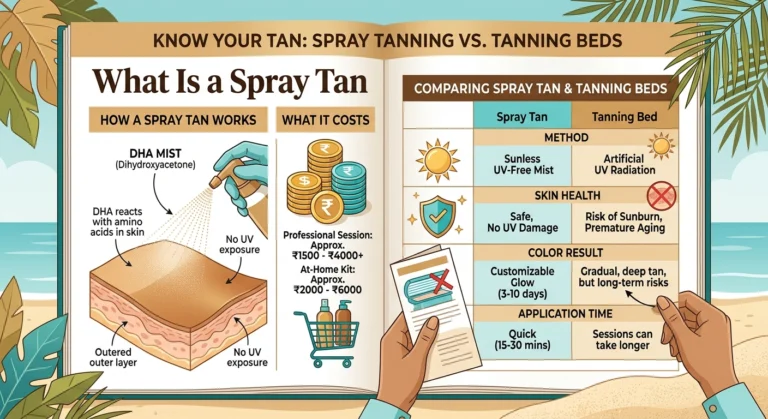
Here’s the thing to understand first: fake tan doesn’t dye your skin permanently. DHA reacts with the outer layer of dead skin cells. That’s it. Which means gentle exfoliation and some basic skin care can fade the color down over time.
Why Does Fake Tan Fade Unevenly?
Short answer: DHA reacts with dead skin cells, and spots like your hands, knees, and elbows are naturally drier, so they hold more color.
DHA (dihydroxyacetone) is the active ingredient in nearly every self tanner. It reacts with amino acids in your skin’s outer layer through something called the Maillard reaction. That reaction is literally what turns your skin brown temporarily.
Since it only affects the surface layer, the color sheds off naturally as those cells turn over. It’s not going to keep getting darker forever, so don’t panic if day one looks intense.
But not all skin behaves the same. Elbows, knees, ankles, hands, feet, these areas are rougher and drier than most of your body. Rougher skin soaks up more product. Simple as that.
So you end up with darker rings around the wrists, deeper color pooling near the ankles, or buildup around your knuckles. It’s rarely the product’s fault. It’s just that these spots collect more than everywhere else.
One thing that helps down the line: keep your skin smooth before you apply self tanner in the first place. Smoother surface, more even reaction.
What’s the Fastest Way to Remove Fake Tan From Your Whole Body?
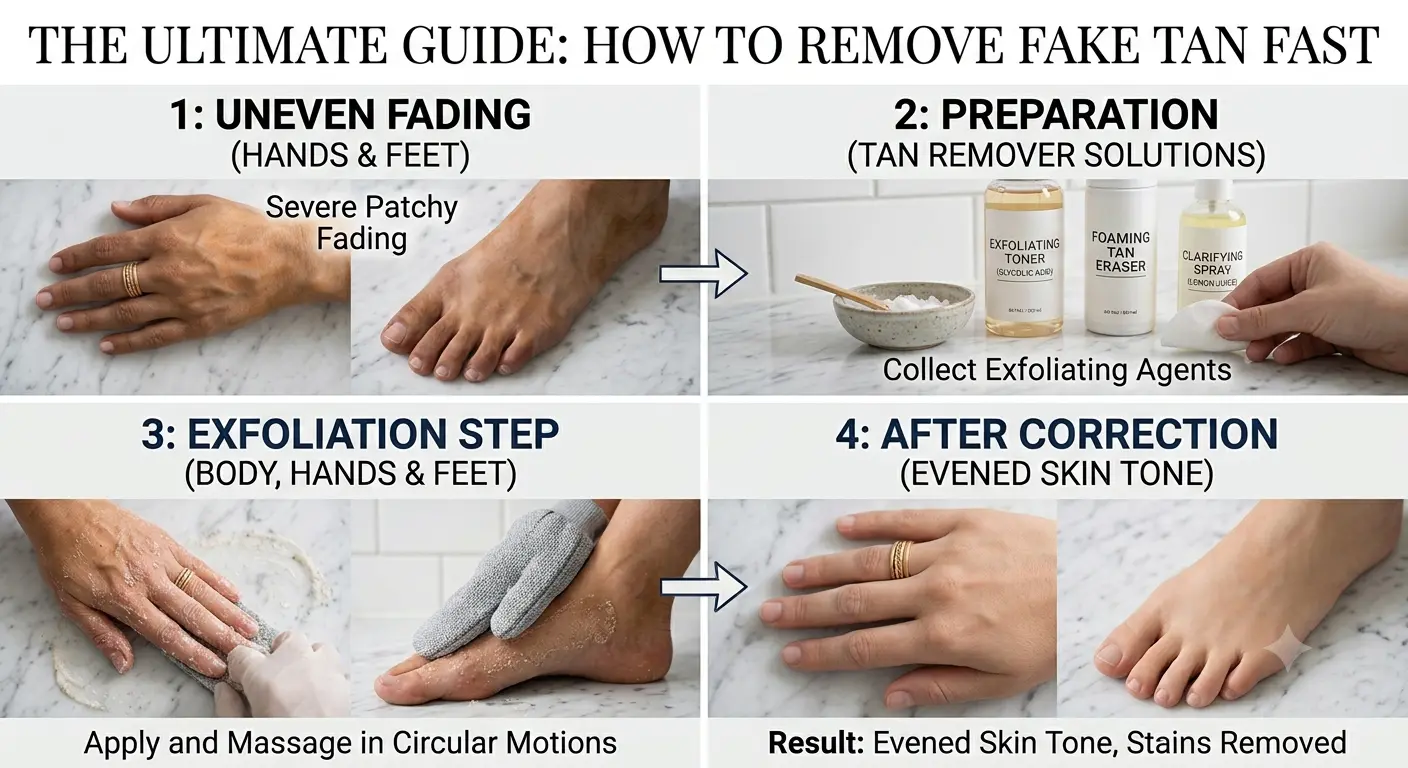
Soften with warm water, then exfoliate gently. Mitt, scrub, oil, whatever works for you.
People search “how to remove fake tan instantly” a lot. Truth is, a fully developed DHA tan isn’t going anywhere in seconds. But you can soften it and even it out fast, often in one session.
Warmth plus gentle exfoliation is the combo that actually moves the needle. Warm water loosens up the outer layer, making it much easier to lift the stained dead skin cells.
Don’t go scrubbing like you’re trying to erase it entirely though. That just leaves your skin tight and angry looking. Slow and steady loosens the color without wrecking your skin barrier.
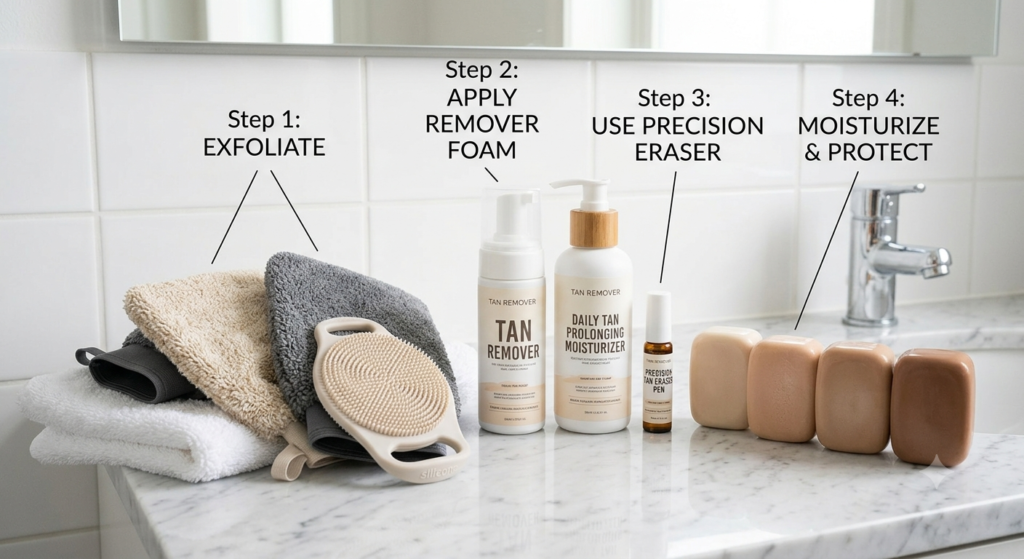
1. Exfoliating Mitt or Glove + Warm Water
This one’s usually my first recommendation. Cheap, simple, no special products needed.
Here’s how:
- Stand under warm water for 5 to 10 minutes, let your skin soften up.
- Wet the mitt, squeeze out excess water.
- Small circular motions across your skin.
- Extra time on elbows, knees, wrists, ankles, the usual suspects.
- Rinse, then moisturize.
Should feel a little rough, never painful. You’ll probably see tiny rolls of skin coming off as you go. Totally normal, that’s just the outer layer shedding.
Patchy tan shows up as streaks or uneven brown edges. Buffing gently blends that out instead of making the lines worse.
Takes about 10 to 15 minutes depending on how much area you’re covering. Skin getting hot or sore? Ease off.
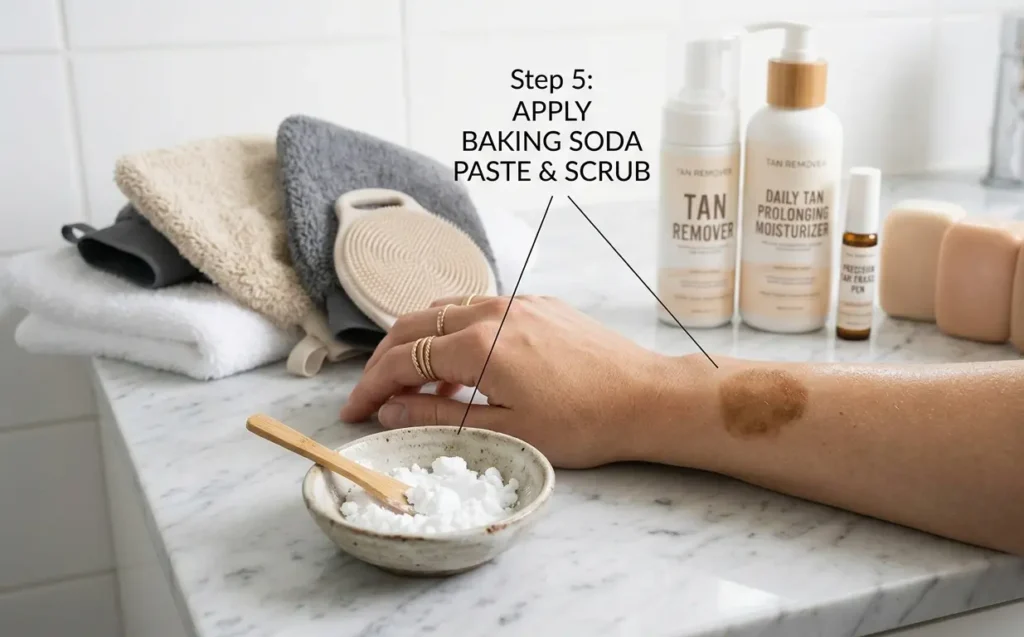
2. Baking Soda Paste
Cheap, effective for small stubborn spots.
- Mix baking soda with a little water into a soft paste.
- Apply a thin layer to the darker patch.
- Let it sit a few minutes.
- Massage gently.
- Rinse and moisturize.
It should feel smooth, a bit grainy, never sharp or scratchy. If it stings or feels off, rinse it away immediately.
Worth noting: dermatologists tend to caution against relying on DIY abrasive or acidic treatments too often. Fine for occasional spot fixes, not something you want in your daily routine. And always patch test first if your skin reacts easily to new things.
3. Lemon Juice or Whitening Toothpaste (Spot Treatment)
Use sparingly. These aren’t gentle.
People try lemon juice or toothpaste on small stubborn patches all the time, it’s a popular internet trick. Wouldn’t be my go to for anything beyond a tiny spot though.
Lemon juice is acidic. Whitening toothpaste is made for teeth, not skin. Combine either with already-exfoliated skin and things can get dry or uncomfortable fast.
Dermatologists generally aren’t fans of household ingredients that weren’t made for skin in the first place. If you try it anyway, test small, stop at the first sign of burning or redness.
For a small patch:
- Tiny amount on the affected spot.
- Leave briefly, don’t let it sit long.
- Rinse thoroughly.
- Moisturize.
Might soften a small patch. For anything bigger, gentle exfoliation is just the safer bet.
4. Hot Bath or Shower + Oil Based Scrub
Best for tan that looks dry and flaky rather than just dark.
Soak in warm water for several minutes first. Steam softens up the buildup zones, knees, elbows, feet, ankles.
Then:
- Oil based scrub on damp skin.
- Gentle circular massage.
- Extra attention on rough patches, but don’t press hard.
- Rinse.
- Moisturize while skin’s still damp.
The oil makes everything glide, so it feels a lot less harsh than a dry scrub. Think gentle polish, not friction.
Usually 10 to 20 minutes depending on coverage. Great option once your tan’s already started fading naturally but left patches behind.
Regular tanner? Prep your skin ahead of time. A solid spray tan prep routine clears dry patches before you even apply.
How Do You Get Fake Tan Off Your Hands Fast?
Focus on knuckles, cuticles, nail edges. That’s where it collects.
Hands give it away first, honestly. Palms, fingers, the skin near your nails, all prone to holding onto extra product.
Biggest mistake? Treating the whole hand the same. Usually only certain spots need real attention.
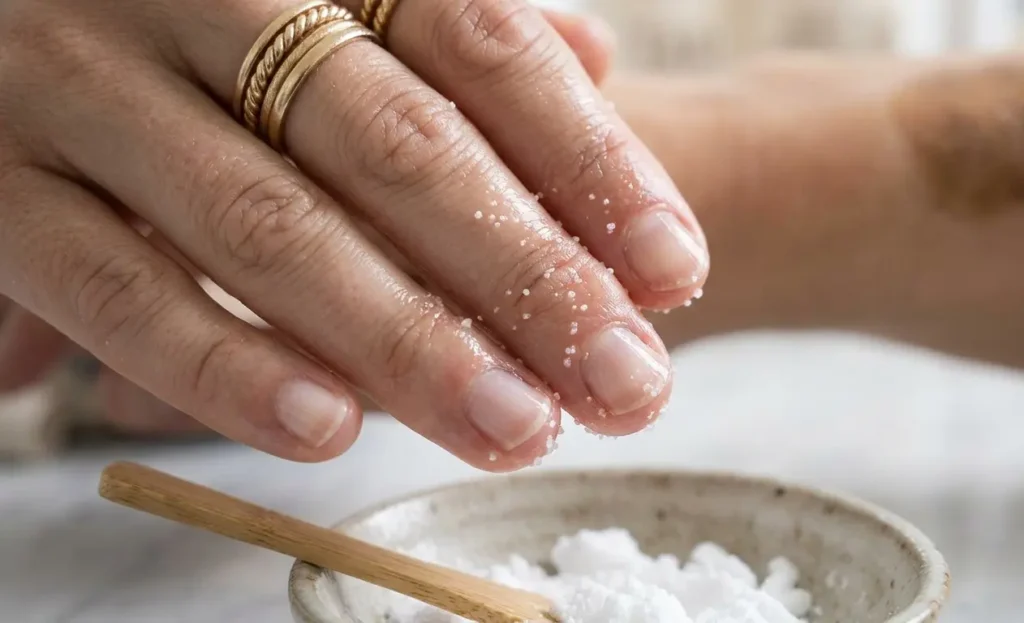
- Soak hands in warm water a few minutes.
- Gentle scrub on darker areas.
- Soft nail brush around cuticles and nail edges.
- Small circles on knuckles and joints.
- Rinse, hand cream.
The nail area is fiddly because tan settles into those tiny cuticle spaces. A soft brush handles it without any aggressive scrubbing.
Fingers darker than your palms? Don’t wash your hands constantly with strong soap, it just dries you out without touching the actual DHA underneath.
Stubborn patch left? An exfoliating glove blends it in. You’re softening the contrast here, not chasing perfection in one go.
How Do You Remove a Spray Tan Specifically?
Two layers to understand here. The instant bronzer washes off in your first shower. The DHA underneath keeps developing regardless.
That gap confuses a lot of people. They shower, expect it all gone, and it’s not, because the actual color hasn’t fully set yet.
If it looks too dark or patchy:
- Soften skin with warm water first.
- Gentle mitt or scrub.
- Focus on the uneven spots, skip the rest.
- Moisturize after.
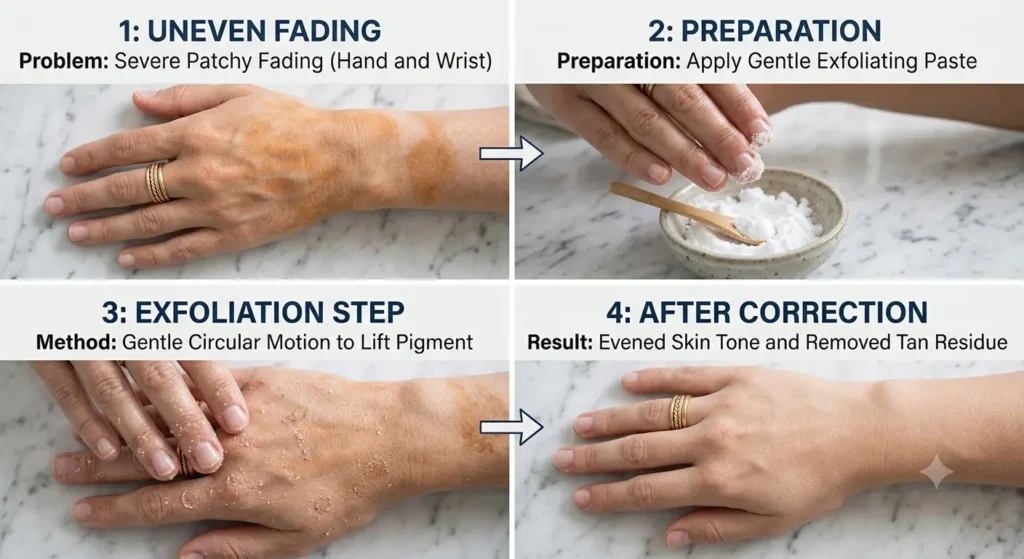
Faded spray tans rarely go evenly. Lighter patches sit right next to darker ones, especially around elbows, wrists, ankles. Gentle exfoliation blends that gap.
Getting tans regularly? A good prep routine before your appointment sets up a smoother base for next time.
What Should You Avoid When Removing Fake Tan?
Skip the harsh stuff. It won’t speed things up, it just adds skin damage on top of the tan problem.
Tempting to reach for something stronger when you’re in a hurry. Doesn’t actually work that way though.
Avoid:
- Bleach or hydrogen peroxide on large areas.
- Over exfoliating skin that’s already raw or sore.
- Picking at peeling tan. Creates worse patches, not fewer.
Also skip exfoliating the same spot more than once a day. Dry, irritated skin catches light differently and makes leftover tan more obvious, not less.
Gradual and gentle wins here, every time.
How Long Does It Take for Fake Tan to Fully Fade?
Usually 5 to 10 days. Comes down to your skin’s natural shedding rate.
Timing varies based on how much tan you applied and how fast your skin renews itself.
Hands fade fastest since they’re washed constantly. Elbows, knees, ankles hang onto color longer because they’re drier.
Fading unevenly? Gentle exfoliation smooths the transition. Don’t chase every last trace immediately, just soften the harsh lines first.
Moisturized skin fades more evenly too. Dry skin breaks the color apart in a patchy, uneven way.
For next time, picking a shade close to your natural tone makes the whole fade look way more natural. A Self Tanner Shade Finder can help you land on the right one.
Also worth checking out Best Self Tanning Lotion picks if you want something that develops evenly from the start.
FAQs
Does fake tan remover really work?
Yes. It uses exfoliating ingredients that loosen the stained outer skin layer.
It’s not an instant eraser though. It speeds up the natural shedding process rather than wiping color away on contact. Results depend on how developed your tan already is.
Will removing fake tan hurt my skin?
Not if you keep it gentle. Harsh methods are what cause the dryness and irritation.
Most people are fine with a soft routine. Problems start when someone scrubs too often or stacks several strong methods in one day.
Skin feeling sore or tight? Take a break before trying again. Patience beats force here.
Can I remove fake tan the same day I applied it?
Yes, easier even, since the DHA hasn’t fully set into your skin yet.
Notice streaks right after applying? A warm wash can catch some of that excess before it develops further.
Once the reaction’s already underway, though, it’s slower going. Warm water, gentle exfoliation, and moisturizer become your main tools at that point.
How do you get self tan off quickly?
Warm water plus gentle exfoliation on the darker spots.
If it came out stronger than you wanted, focus on blending rather than erasing everything in one sitting.
A warm shower followed by a mitt cuts down the darker areas fast. Pay attention to elbows, ankles, wrists especially.
How do you get self tan off your hands?
Target the dry areas near cuticles and nails, not the whole hand.
Tan settles into those tiny cuticle spaces, which makes hands trickier than they should be.
A soft nail brush works better than scrubbing everywhere. Gentle pressure, don’t dig in around the nails.
Repeated washing lifts surface product but doesn’t really touch the developed DHA underneath.
How do you get spray tan off hands?
Blend the darker areas around fingers, wrists, and knuckles with gentle exfoliation.
Hands move constantly and get washed a lot, so spray tan wears unevenly there more than anywhere else.
Don’t chase every trace. Soften the contrast between light and dark spots instead. Gentle scrub, then moisturizer.
Fingers darker after a spray tan? Skip the aggressive scrubbing, irritated skin just ends up looking rougher.