What Is a Spray Tan? How It Works, What It Costs, and How It Compares to a Tanning Bed
A sun kissed glow sounds nice. But you don’t need hours baking outside, or lying under UV lights, to get one, and honestly that’s the whole appeal of spray tanning in the first place. It gives you the bronzed look without exposing your skin to UV rays at all.
Never had one before? You’ve probably got questions. What happens during the appointment. How long the color actually sticks around. Whether it looks natural or screams “I did this at a strip mall.” What it’s going to cost you. And maybe you’re weighing it against a tanning bed too, trying to figure out which one fits your skin and your life better.
Look, it’s not complicated. Once you get how spray tanning works, what messes with the results, and how to prep for it, the whole thing stops feeling like a mystery.
What Is a Spray Tan?
Quick Answer: A spray tan is a cosmetic tanning method where a fine mist containing DHA is applied to the skin, creating a bronzed look without any sun or UV exposure.
A spray tan, at its core, is a temporary way to add color using a solution containing dihydroxyacetone, or DHA. It doesn’t touch how much pigment your skin makes on its own. It just works on the outermost layer of skin to fake the appearance of a tan.
Most professional spray tans happen one of two ways. A trained technician using an airbrush system, or an automated spray booth that does the work for you. During an airbrush session the technician mists an even layer of solution across your body, adjusting the coverage as they go depending on the shade you’re after. Booths are different, since the machine sprays automatically from a few angles at once, no human hands involved.
There are at home options too. Sprays, mousses, other self tanning products you apply yourself, same DHA principle underneath but you’ve got to pay a lot more attention during application if you don’t want streaks. Worth a look at Best Spray Tan Products if you’re trying to decide between the at home route and booking a professional session.
Not permanent, though. Like a natural tan, it fades as your skin sheds its outer cells over time.
In my experience, for a lot of first timers the real draw is control. Want something subtle for every day? Go lighter. Got a wedding or a beach trip coming up? Go deeper. Either way you’re not stuck waiting around in the sun for days to get there.
How Do Spray Tans Work?
Quick Answer: Spray tans work by coating the skin in DHA, which reacts with amino acids in the outer skin layer to darken it over several hours, along with a cosmetic bronzer for instant color.
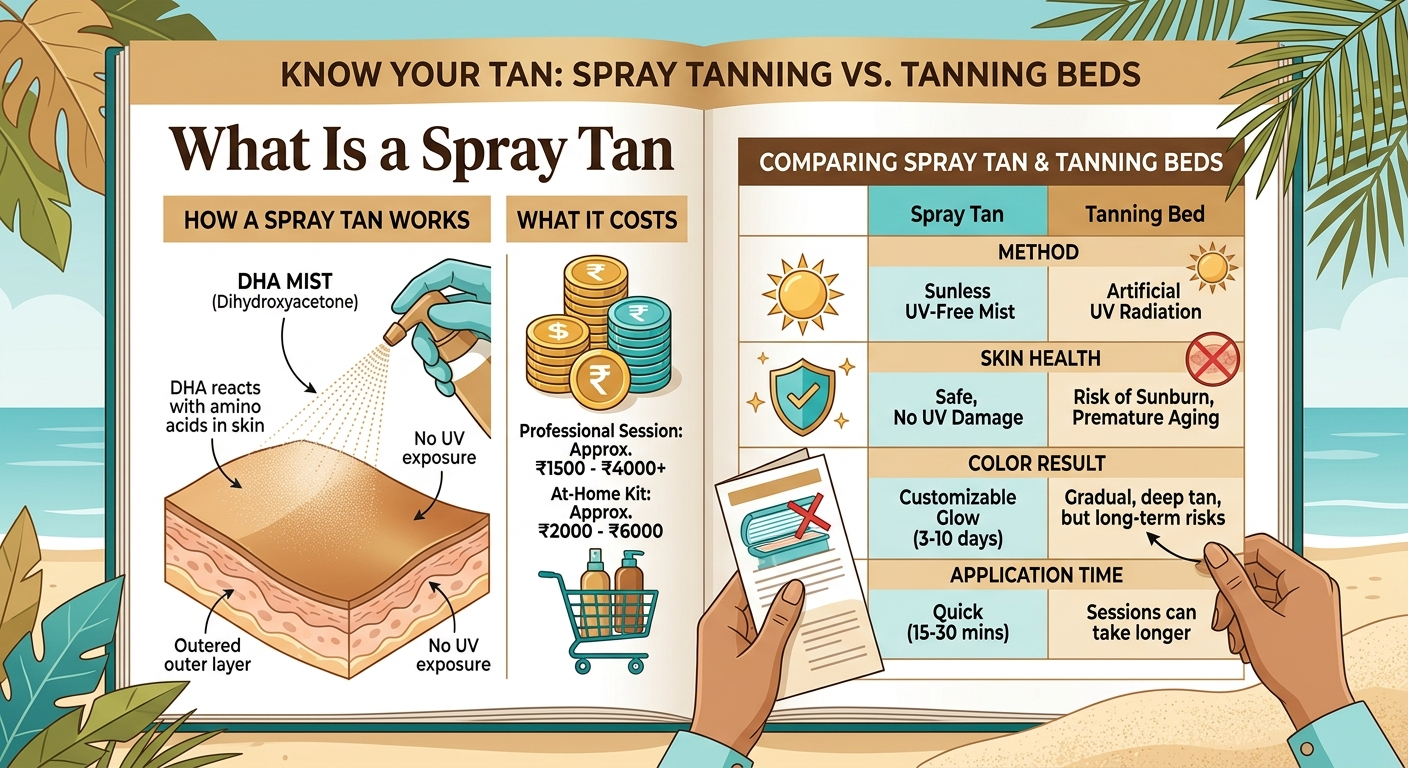
DHA is the ingredient doing all the actual work here. Once it’s on your skin it reacts with amino acids in the outermost layer of dead skin cells, and that reaction produces darker pigments called melanoidins. That’s your bronze look, right there.
Two layers of color, not one, is really how most formulas operate.
The first layer is cosmetic bronzer. Instant, visible color the moment you step out of the booth, mostly there so you (and the technician) can see the coverage is even before you walk out the door.
The second layer takes its time. This is the actual DHA reaction, and it plays out over several hours, which is why a spray tan can look like a totally different color the next morning compared to right after your appointment. That first shower usually washes the bronzer away, not gonna lie, but the DHA color stays.
Development time depends on the formula, and whatever instructions your salon hands you. Most traditional spray tans want 4 to 8 hours before you shower, though some of the newer formulas are built to develop faster.
The color keeps deepening the whole time it’s developing. So if it looks too light, or a little too dark, right after your appointment, don’t stress about it yet, just wait and check again tomorrow. From what I’ve seen the final result almost always looks more natural once the DHA has fully done its thing. Skin tone, formula, how evenly it went on, your skincare routine before and after, all of it plays into the final shade.
How Much Does a Spray Tan Cost?
Quick Answer: A professional spray tan typically costs between $25 and $60 depending on location and salon, while at home spray tan products cost far less per use.
Prices swing a fair amount depending on where you go, what kind of service you pick, and how experienced the person spraying you is. Generally you’re looking at $25 to $60 per session for a standard professional spray tan, though it climbs higher in bigger cities, fancier salons, or if you’re adding custom touches.
Application method matters here too. A spray booth is usually the cheaper route since it’s automated, no technician’s time to pay for. A mobile technician who comes to your house tends to cost more, you’re paying for their travel and their full attention. Airbrush tans can land on the pricier side as well, mostly because the whole session gets customized to your body, your skin tone, and the exact result you want.
A few other things that push the price around:
| Factor | How it can affect cost |
| Salon location | Prices are often higher in major cities or high demand areas |
| Application type | Custom airbrush services may cost more than automated booths |
| Membership packages | Regular customers may get discounted sessions |
| Special events | Bridal, photoshoot, or customized tans may have higher pricing |
At home products cost less per use, more often than not, especially if you tan regularly. Real cost, though, comes down to bottle size, formula quality, and how many uses you actually squeeze out of one bottle.
Not gonna lie, price isn’t the best way to judge any of this. Cheaper options work great for plenty of people. Others are happy to pay more for personalized color matching and a professional touch. First timer? Go with someone experienced. Saves you the headache of patchy coverage or a shade you hate.
Spray Tan vs. Tanning Bed: What’s the Difference?
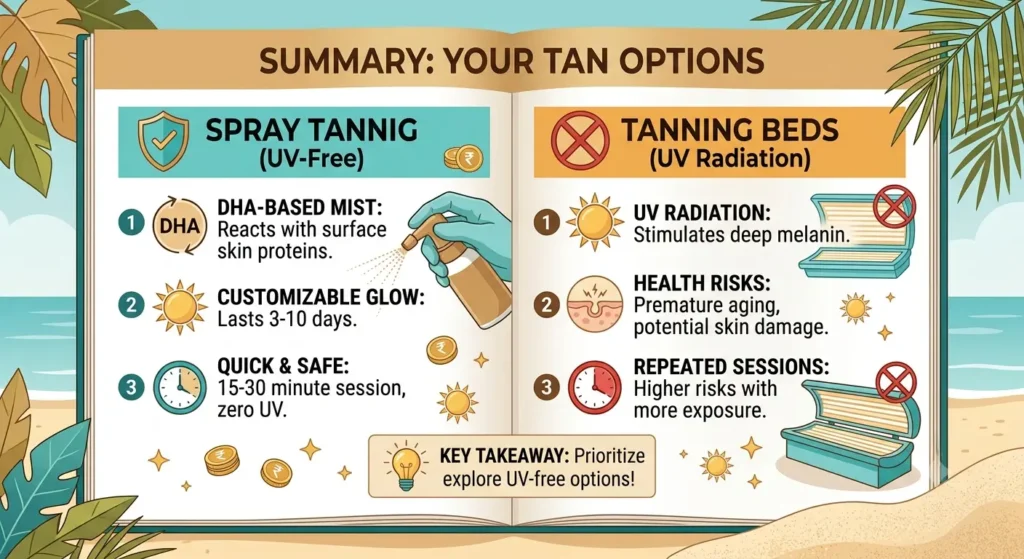
Quick Answer: A spray tan uses DHA to color the skin’s surface with no UV exposure, while a tanning bed uses UV light to stimulate melanin production, which carries skin damage and cancer risk that spray tanning doesn’t.
Comes down to how each one actually makes color happen.
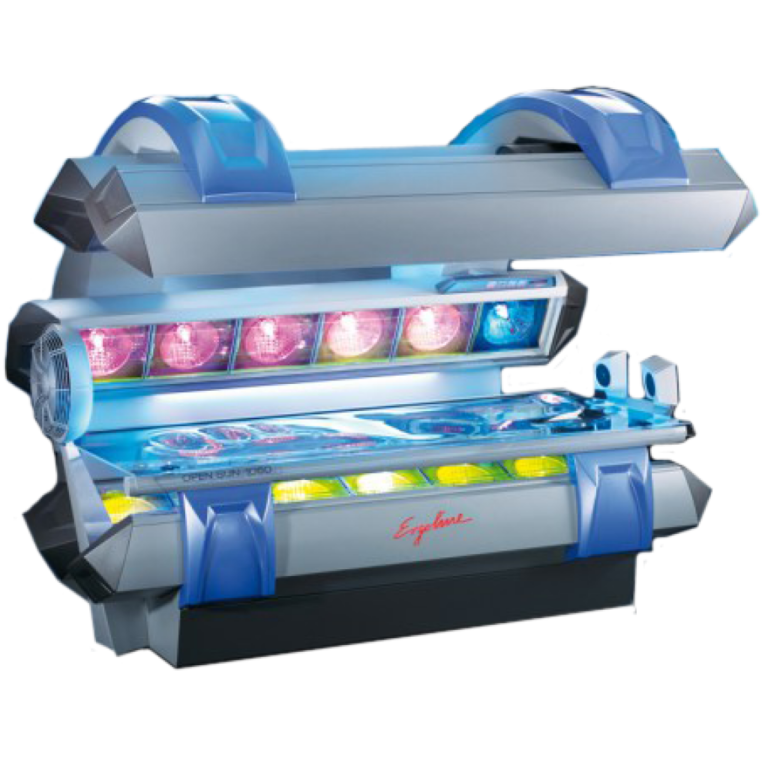
A spray tan uses DHA for that bronze look on the surface of your skin, no ultraviolet light, no melanin production triggered at all. A tanning bed does the opposite: UV light stimulates your skin’s own tanning response, and that can cause damage over time. Side note, this is basically the entire reason dermatologists have been begging people to quit tanning beds for decades.
Quick side by side, since a table says it faster than I can:
| Feature | Spray Tan | Tanning Bed |
| How color develops | DHA reacts with the outer skin layer | UV light stimulates melanin production |
| UV exposure | No UV exposure | Uses UV light |
| How long results last | Usually around 5 to 10 days | Can last longer with repeated sessions |
| Main upkeep | Repeat applications as color fades | Regular sessions are needed to maintain color |
| Cost | Usually paid per session | Often requires ongoing sessions or memberships |
People gravitate toward spray tanning mainly because it gives you the look without the UV exposure. And that matters. Tanning beds carry a real link to skin damage and higher skin cancer risk.
Doesn’t mean a spray tan equals naturally tanned skin, though. It only changes color on that outermost layer. There’s no biological response happening like there is with actual UV exposure.
Control is the other piece of it. With a spray tan you pick how deep you want to go, a technician can dial it up or down for you. Tanning beds don’t work that way. You get whatever your skin decides to do with the UV exposure it gets, however often you show up.
If you want a temporary tan for a trip, a big event, or just a boost of everyday confidence, spray tanning usually wins out, no intentional UV exposure required. Curious about protecting your skin while keeping the glow going? How to Tan Safely is worth a read.
Why Do Spray Tans Sometimes Turn Out Bad?
Quick Answer: Spray tans usually look uneven or too dark when skin wasn’t exfoliated beforehand, the technician applied product unevenly, or the person showered too early before the color fully developed.
Done right, a spray tan looks smooth and completely natural. But when people end up disappointed, it’s almost always prep issues, application mistakes, or skipped aftercare.
Dry skin is the biggest culprit. Elbows, knees, ankles, hands, anywhere rough or dehydrated soaks up more solution than smoother skin does. Darker patches, basically guaranteed.
Prep matters more than most people realize. Lotion, deodorant, perfume, anything left on your skin can mess with how evenly the solution applies, which is exactly why most professionals push a proper prep routine before you show up.
Moving around during the session doesn’t help either. The technician needs you positioned right so the mist reaches everywhere evenly, and even a small shift in posture can throw the whole thing off.
And then there’s showering too soon. DHA needs its development window, full stop, and washing it off early leaves you with weaker color or patches that fade unevenly.
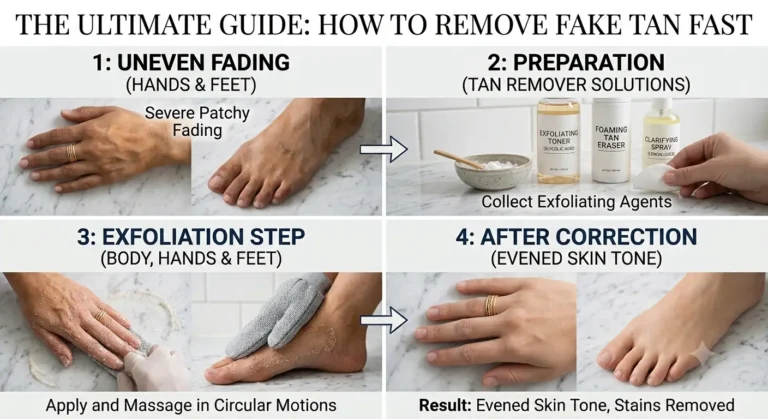
Good news is none of it’s permanent. Your skin sheds naturally, so mistakes fade right along with everything else eventually. Dealing with uneven color right now? How to Remove Fake Tan walks you through fixing it.
Want to skip the problem next time around? A solid prep schedule does most of the heavy lifting. The Spray Tan Prep Timeline tool can help you figure out when to exfoliate, what to skip, and how to get your skin ready before your appointment.
Bottom Line
Look, whether you go with a spray tan or a tanning bed really comes down to what you’re after. If you just want that quick glow without dealing with UV exposure, spray tanning is the better call, most of the time. No sun damage, no waiting around for days, and you’re the one deciding how deep or light you want to go.
Just don’t skip the basics. Exfoliate beforehand, prep your skin properly, and give that development window the time it needs. That’s really what separates a decent spray tan from a great one.
First timer? Go find someone experienced to do it for you, at least the first go around. Doing it at home instead? Take a minute to actually read up on the formula before you start. And either way, don’t ditch the sunscreen afterward, the tan’s just color, not protection.
FAQ‘s
Is spray tan bad for your skin?
Quick Answer: No, spray tan is generally considered safe for skin since DHA only affects the outermost dead skin layer, though people with certain skin sensitivities should patch test first.
For most people, spray tanning is just a cosmetic way to change skin color temporarily, no UV exposure involved. DHA only touches the outermost layer of skin, mostly dead cells your body was going to shed anyway.
Everyone’s skin reacts a little differently though. Sensitive skin, allergies, a history of reacting to cosmetic products? Patch test a small area first. Better to find out on your elbow than your whole body.
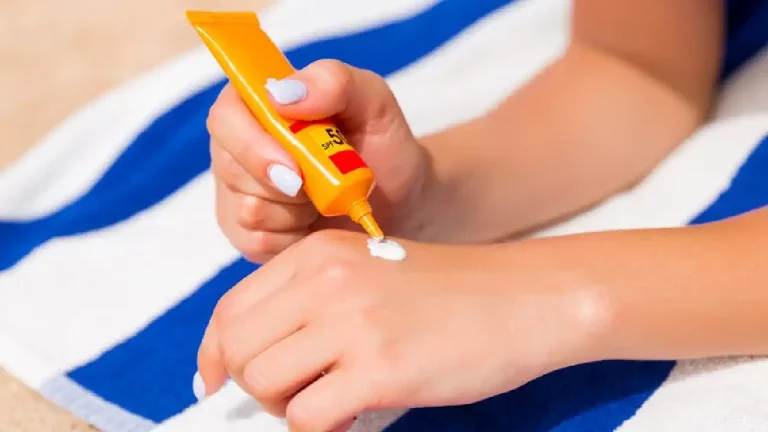
One thing people forget: a spray tan gives you zero sun protection. Skin looks darker, sure, but you still need actual sunscreen out there.
At the end of the day it’s about temporary appearance, not messing with how your skin naturally tans. Done right, plenty of people find it a solid swap for UV based tanning.
How long does a spray tan last?
Quick Answer: A spray tan typically lasts 5 to 10 days, fading gradually as the skin naturally sheds.
Most spray tans hang around 5 to 10 days. Exact timing depends on your skin type, your skincare habits, the formula, and how well you prepped going in.
First few days show the strongest color, from what I’ve seen. After that it lightens up gradually as your skin exfoliates naturally on its own. Hands, feet, anywhere under tight clothing, those spots see more friction so they tend to fade quicker than the rest of you.
Want it to last? Skip the harsh exfoliation right after your appointment. Stick to gentle products, keep your skin moisturized, that helps the color fade evenly instead of in blotchy patches.
Won’t last forever. But with the right care you can hold onto that smooth glow for a good stretch before your next appointment rolls around.